Signs Your Raleigh Garage Door Needs Repair or Replacement
Signs Your Raleigh Garage Door Needs Repair or Replacement in 2026
Reading time: 9 minutes
Table of Contents
- Why Raleigh Homeowners Can’t Ignore Garage Door Trouble
- The Core Warning Signs
- Repair vs. Replace: How to Decide
- Raleigh-Specific Factors That Speed Up Wear
- Real Scenarios From the Triangle
- Your Next Steps
- FAQs
Why Raleigh Homeowners Can’t Ignore Garage Door Trouble
Ever backed out of your driveway on a rushed Monday morning, only to have your garage door groan, jerk, and refuse to close? You’re not alone. In 2026, garage doors remain one of the most overlooked—yet heavily used—components of a Raleigh home. With North Carolina’s humid summers, sudden cold snaps, and the region’s clay-heavy soil causing foundations to shift slightly over time, garage door systems in the Triangle take a beating that homeowners in drier climates simply don’t experience.
Here’s the straight talk: a garage door isn’t just a convenience—it’s your home’s largest moving part and, in many cases, its biggest security gap if neglected. According to the International Door Association, the average residential garage door cycles open and closed roughly 1,500 times per year. That’s a lot of wear on springs, rollers, and openers, and Raleigh’s growing population (Wake County added more than 20,000 new residents in 2025 alone) means more homes—many built during the 1990s and early 2000s boom—are now reaching the age where components start failing.
Let’s dive deep into what to watch for, when a quick fix will do, and when it’s time to invest in a full replacement.
The Core Warning Signs
Most garage door failures don’t happen overnight. They build gradually, giving attentive homeowners a window to act before a minor issue becomes an expensive emergency.
Unusual Noises and Movement
A healthy garage door should open and close with a smooth, relatively quiet motion. If yours is grinding, squealing, or slamming shut faster than it should, that’s your system waving a red flag. Common culprits include:
- Worn rollers – nylon rollers typically last 7-10 years; steel rollers can go longer but rust in humid climates.
- Loose hardware – vibration loosens bolts and brackets over thousands of cycles.
- Failing torsion springs – a loud “bang” often signals a spring has snapped.
- Track misalignment – causes scraping sounds and uneven movement.
Slow Response or Uneven Movement
If your door hesitates before responding to the remote, or one side visibly droops while the other stays level, you’re likely dealing with spring imbalance or opener sensor issues. Left unaddressed, an unbalanced door puts excessive strain on the opener motor—often shortening its lifespan by 30-40%, according to garage door manufacturer data.
Quick Test You Can Do Today
Disconnect the opener (pull the emergency release cord) and manually lift the door halfway. It should stay in place on its own. If it falls or shoots upward, your springs are out of balance—a job for a professional, not a DIY fix, since torsion springs store dangerous amounts of tension.
Visible Physical Damage
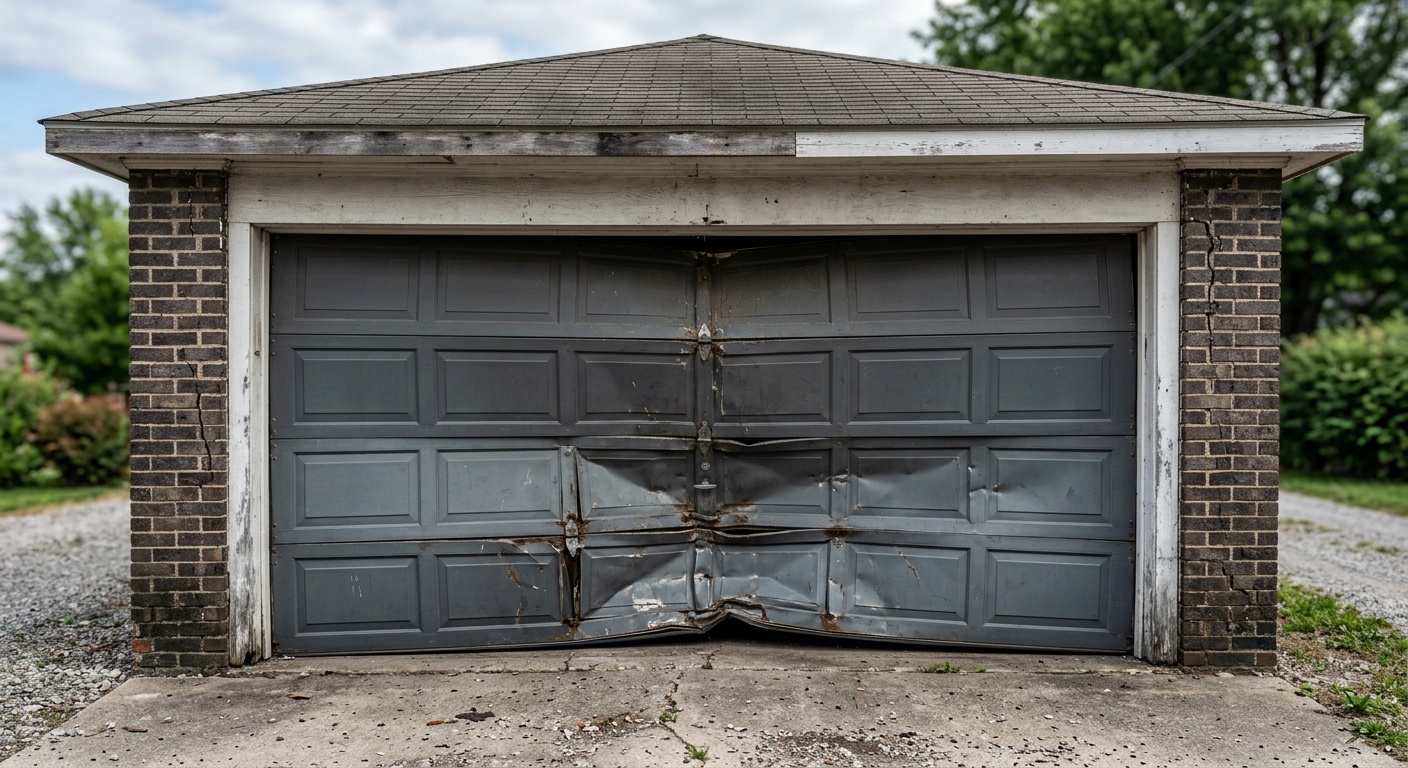
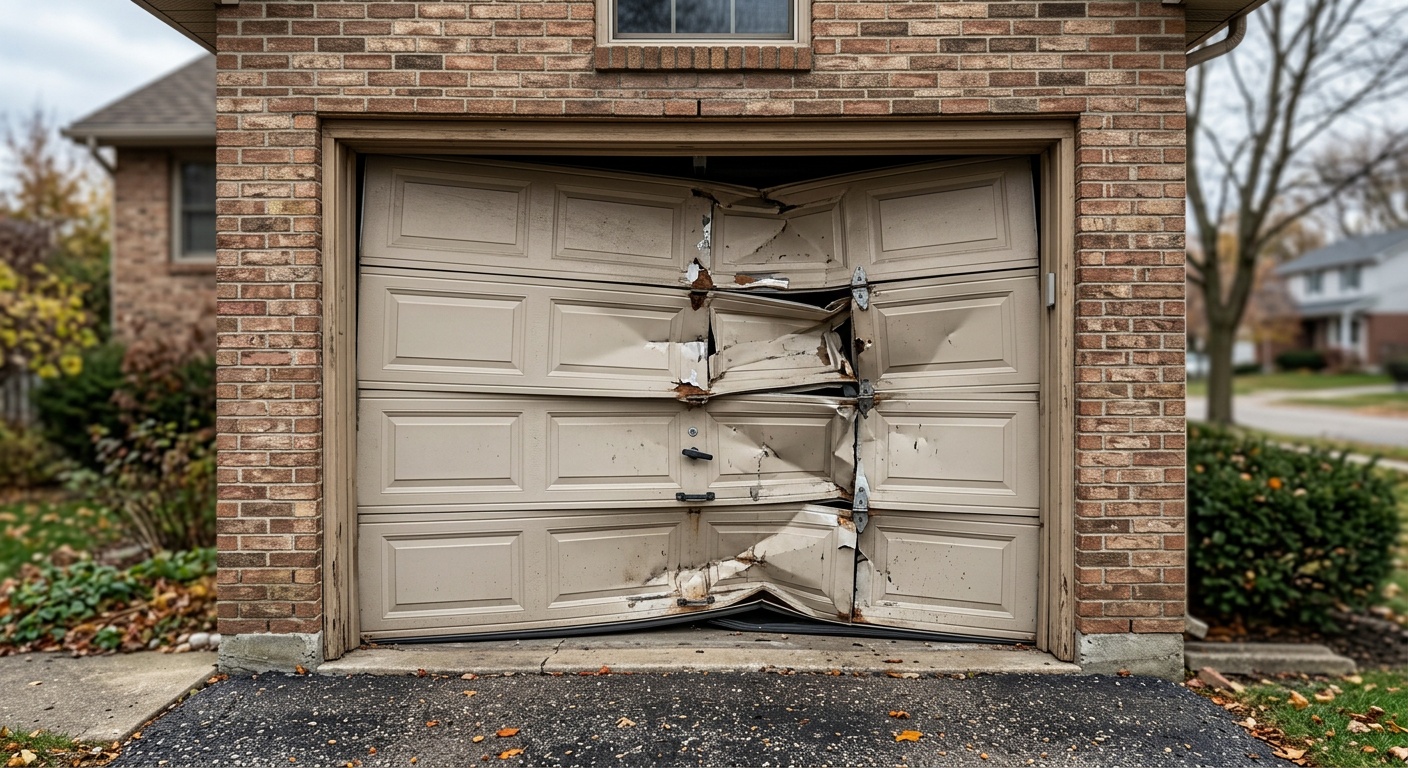
Cracked panels, rust spots, warped wood, or dents aren’t just cosmetic problems. They compromise insulation, weaken structural integrity, and—especially in older steel doors—accelerate corrosion once moisture gets behind the paint layer. In Raleigh’s humidity, a small rust spot can spread across an entire panel within a single rainy season.
Repair vs. Replace: How to Decide
This is where homeowners often get stuck. Repair feels cheaper upfront, but replacement can be the smarter long-term investment—especially with 2026 energy codes pushing for better insulation standards. Here’s a practical breakdown:
| Factor | Repair Makes Sense | Replacement Makes Sense |
|---|---|---|
| Door Age | Under 10 years | Over 15-20 years |
| Damage Extent | Single panel or spring | Multiple panels, warped frame |
| Energy Efficiency | Already insulated door | Non-insulated, drafty door |
| Repair Cost | Under $350 | Approaching 50% of new door cost |
| Frequency of Issues | First problem in years | Third repair call in 12 months |
Pro Tip: If you’re calling a technician more than twice a year, you’re likely funding a slow-motion replacement anyway—just in smaller, less efficient installments.
Cost Snapshot for the Triangle Area in 2026
Based on current regional pricing trends, here’s roughly what Raleigh homeowners are seeing:
Raleigh-Specific Factors That Speed Up Wear
Not all garage doors age the same way—location matters. Raleigh’s climate and housing patterns create a few unique pressure points:
- Humidity swings: Summer humidity averaging 65-70% accelerates rust on unsealed steel components.
- Pollen season: Heavy spring pollen (Raleigh consistently ranks among the top pollen-count cities nationally) clogs tracks and rollers if not cleaned regularly.
- Older subdivisions: Neighborhoods built in the late 1990s through early 2000s—common throughout North Raleigh and Cary-adjacent areas—are now hitting the 20-25 year mark, right when original doors and openers reach end-of-life.
- Storm activity: Increased severe thunderstorm frequency in 2025-2026 has led to more wind-related track and panel damage reports from local repair companies.
Real Scenarios From the Triangle
Scenario 1 – The North Raleigh Fixer-Upper: A family in a 1998-built home near Falls of Neuse Road noticed their door sagging on one side. A technician found the torsion spring had lost nearly 40% of its tension—common after two decades of daily cycles. Cost to repair: $275. Total time: under two hours. Replacement wasn’t necessary since the door itself was structurally sound.
Scenario 2 – The Cary Border Rust Job: A homeowner near the Cary-Raleigh line had a steel door with visible rust bubbling through the paint after years of lawn sprinkler overspray. By the time they called for service, three panels needed replacement, plus a full repaint wasn’t feasible on a door that old. They opted for a full insulated replacement, which also cut their garage’s temperature swing by roughly 15 degrees in summer.
Scenario 3 – The Downtown Raleigh Townhome Opener Failure: A newer townhome (built 2019) had an opener that suddenly stopped responding to the app. Diagnosis revealed a faulty circuit board, not a door problem at all. Because the door itself was in great shape, only the opener logic board was replaced—a $220 fix that avoided an unnecessary full-system replacement.
Your Next Steps
Ready to turn uncertainty into a clear plan? Here’s a practical roadmap:
- Do the balance test this week. Disconnect the opener and manually check if the door holds its position halfway open.
- Inspect for rust and cracks on both the interior and exterior panel surfaces, especially near the bottom seal.
- Listen during the next three open/close cycles. Note any new grinding, popping, or delayed response.
- Get a written estimate from a licensed Raleigh technician before committing to repair or replacement—reputable companies won’t pressure same-day decisions on major replacements.
- Factor in insulation value if you’re leaning toward replacement; an insulated door can meaningfully reduce garage temperature swings during both July heat and January cold snaps.
FAQs
How long should a garage door realistically last in Raleigh’s climate?
Most quality steel or composite doors last 15-20 years with regular maintenance, though Raleigh’s humidity can shave a few years off that if the door isn’t properly sealed or occasionally inspected for rust.
Can I replace just the springs without replacing the whole door?
Yes, in the majority of cases. Spring replacement is one of the most common and cost-effective repairs, provided the door panels and tracks are otherwise in good condition. It’s also one of the few garage door tasks best left strictly to professionals due to the tension involved.
Is it worth upgrading to a smart garage door opener during a repair?
If you’re already paying for a service call or opener repair, upgrading to a smart, app-connected opener is often a smart incremental investment—typically adding $150-$300 to the job while offering remote monitoring, which many Raleigh homeowners appreciate given the area’s rising package theft reports.
Future-Proofing Your Raleigh Garage Door
Garage doors rarely fail without warning—they whisper before they shout. The homeowners who catch a squeal, a sag, or a rust spot early are the ones who spend hundreds instead of thousands. As Raleigh continues its rapid growth into 2026 and beyond, with more homes crossing that 15-20 year threshold each year, garage door health is quietly becoming as important a maintenance checkpoint as HVAC servicing or roof inspections.
So here’s the real question: the next time your door makes that odd little noise on the way down, will you shrug it off, or will you treat it as the early signal it actually is? Your garage door has been trying to tell you something—maybe it’s time to finally listen.