How Much Does Garage Door Installation Cost in Raleigh in 2026
How Much Does Garage Door Installation Cost in Raleigh in 2026?
Reading time: 8 minutes
So your garage door finally gave up the ghost—or maybe it’s just an eyesore you’ve been tolerating since the Bush administration. Either way, you’re now staring down a home improvement decision that feels deceptively simple but hides a surprising amount of complexity. Let’s fix that.
Table of Contents
- The Raleigh Garage Door Market in 2026
- Average Cost Breakdown by Door Type
- What Actually Drives Your Final Price
- Real Raleigh Homeowner Scenarios
- Common Challenges (And How to Dodge Them)
- Smart Ways to Save Without Cutting Corners
- FAQs
- Your Roadmap Forward
The Raleigh Garage Door Market in 2026
Raleigh’s housing boom hasn’t slowed down much, and neither has demand for garage door replacements. With interest rates finally easing and more homeowners tackling deferred maintenance on properties bought during the 2021-2023 rush, installers across the Triangle report booking windows stretching two to three weeks out during peak spring and fall seasons.
Here’s the straight talk: garage door installation in Raleigh typically runs between $1,200 and $4,500 installed, with most homeowners landing somewhere around $2,300 for a standard double-car door. That’s a noticeable bump—roughly 6-9%—from 2024 pricing, driven mostly by steel tariffs, insulation material costs, and labor rates that have crept up as skilled tradespeople remain in short supply throughout Wake County.
Local installer Marcus Webb, who’s run a garage door company out of Garner for over 15 years, put it bluntly: “We’re seeing homeowners shocked that a basic door now costs what a premium insulated model cost five years ago. It’s not price gouging—it’s just what steel, springs, and skilled labor actually cost now.”
Average Cost Breakdown by Door Type
Not all garage doors are created equal, and the price gap between options is wider than most homeowners expect. Here’s what you’re likely to pay in the Raleigh metro area right now.
| Door Type | Material | Installed Cost | Lifespan |
|---|---|---|---|
| Single-panel steel | Non-insulated steel | $1,200 – $1,800 | 15-20 years |
| Standard double-car | Insulated steel | $2,000 – $2,900 | 20-25 years |
| Carriage-style | Wood composite | $3,000 – $4,800 | 25-30 years |
| Custom wood | Cedar/redwood | $4,500 – $7,500 | 20-25 years (with upkeep) |
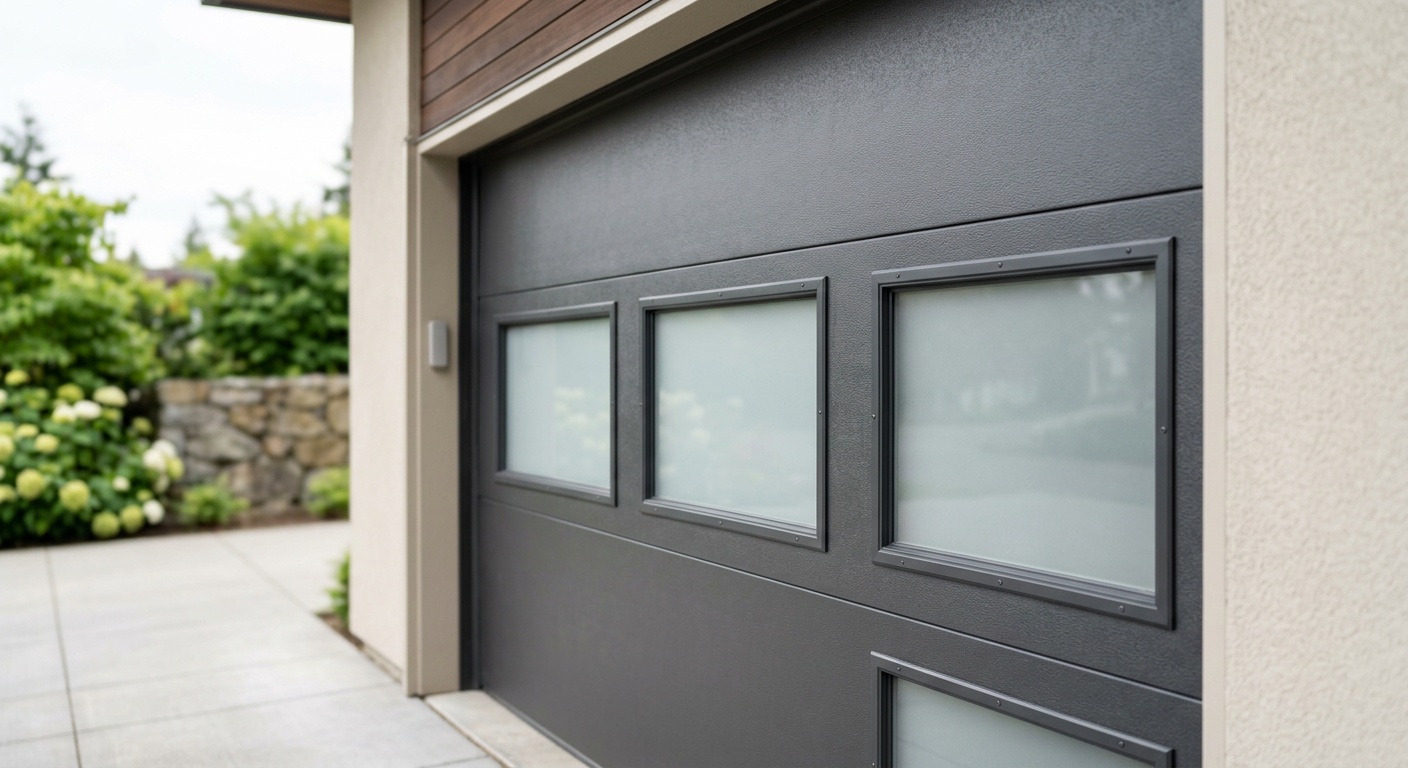
| Aluminum/glass modern | Aluminum frame, glass panels | $3,800 – $6,200 | 20-25 years |
Visualizing the Price Gap
To make the differences easier to digest, here’s a simplified comparison of average installed costs across door categories (based on midpoint pricing).
What Actually Drives Your Final Price
Quick scenario: two neighbors on the same Raleigh cul-de-sac order what they think is the “same” garage door. One pays $2,100. The other pays $3,400. What happened?
The gap almost always comes down to a handful of variables installers weigh before quoting:
- Door size and configuration — A single-car opening runs cheaper than a double, obviously, but oversized or custom-width openings (common in older Raleigh neighborhoods like Hayes Barton) require custom fabrication.
- Insulation rating — R-value matters more than ever with NC’s humid summers and occasional cold snaps. Expect to pay $300-$600 more for high R-value doors.
- Opener compatibility — If your existing opener is more than 10 years old, installers often recommend replacing it alongside the door, adding $250-$600.
- Structural repairs — Rotted framing or misaligned tracks (common in homes built before 2005) can add $200-$800 to the job.
- Labor demand — Spring and early fall are peak seasons in Raleigh; scheduling installation in January or July can sometimes shave 10-15% off labor costs.
The Hidden Cost Most Homeowners Miss
Here’s something few contractors volunteer upfront: spring replacement. Torsion springs typically fail every 7-10 years, and many “door replacement” quotes don’t include a spring system rated for the new door’s weight. If your installer quotes suspiciously low, ask directly whether springs, cables, and rollers are included—that omission alone can add $150-$400 after the fact.
Real Raleigh Homeowner Scenarios
Case Study 1: The North Raleigh Retrofit. The Alvarez family in the Brier Creek area needed to replace a 22-year-old wooden door that had warped from moisture exposure. They opted for an insulated steel carriage-style door with a smart opener upgrade. Total cost: $3,650, including haul-away of the old unit. Their installer completed the job in under five hours.
Case Study 2: The Budget-Conscious Downtown Bungalow. A single-car garage near Five Points needed a straightforward non-insulated steel replacement. With no structural issues and a same-week off-peak booking in late January, the homeowner paid just $1,340 total—well under the metro average.
Case Study 3: The Modern New Build. A newly constructed home in Wake Forest wanted an aluminum-and-glass door to match a contemporary aesthetic. Custom sizing and glass panel upgrades pushed the total to $5,900, though the homeowner noted the resale value boost was “absolutely worth it” according to their realtor’s comps.
Common Challenges (And How to Dodge Them)
Challenge 1: Lowball Quotes That Balloon Later
Some Raleigh installers advertise base prices as low as $900 to get a foot in the door, then tack on “necessary” upgrades once they’re on-site. The fix: always request an itemized written quote before signing anything, specifying door, springs, opener, trim, and disposal fees separately.
Challenge 2: HOA Restrictions
Many Raleigh subdivisions—especially newer developments in Apex-adjacent zones and parts of North Hills—have strict HOA rules about door color, material, and window placement. Homeowners who skip HOA approval sometimes face costly do-overs. Always confirm compliance before ordering.
Challenge 3: Underestimating Insulation Needs
North Carolina summers are brutal on attached garages, especially those adjacent to living space. Skipping insulation to save $300 upfront often costs more in energy bills over a five-year window. Industry data from the Door and Access Systems Manufacturers Association suggests insulated doors can reduce garage temperature swings by up to 20 degrees Fahrenheit compared to non-insulated models.
Smart Ways to Save Without Cutting Corners
- Bundle door and opener installation into a single service call to save on labor.
- Ask about manufacturer rebates—several 2026 promotions from major brands offer $100-$250 back on insulated models.
- Get at least three quotes; pricing variance across Raleigh installers can exceed 30% for identical specs.
- Schedule during off-peak months (January, July) when contractors have more flexible pricing.
- Consider refurbished or builder-grade steel doors for rental properties or garages used purely for storage.
FAQs
Is it cheaper to repair my existing garage door instead of replacing it?
Usually yes, if the damage is limited to springs, cables, or a single panel. Repairs in Raleigh typically cost $150-$450. But if your door is over 15 years old or has multiple failing components, replacement often makes more financial sense long-term.
How long does a typical installation take?
Most standard double-car door installations take between 3 and 6 hours. Custom wood or oversized doors can stretch installation into a full day, especially if structural repairs are needed.
Do I need a permit for garage door replacement in Raleigh?
In most cases, straightforward like-for-like replacements don’t require a permit through the City of Raleigh. However, structural modifications, such as changing the opening size, typically do. Always confirm with your installer or the city’s permitting office before starting work.
Your Roadmap Forward
Garage door pricing in Raleigh isn’t just a random number—it’s a reflection of material costs, local labor markets, and the specific demands of your home. As 2026 unfolds, expect prices to remain elevated compared to pre-2024 norms, with insulation and smart-opener integration becoming standard rather than optional upgrades.
Here’s your practical next-step checklist:
- Get three itemized quotes before committing to any installer.
- Confirm whether springs, opener compatibility, and disposal are included in your quote.
- Check HOA guidelines if you live in a managed community.
- Time your installation for off-peak months if budget flexibility matters more than urgency.
- Prioritize insulation if your garage shares a wall with living space.
Whether you’re patching up a starter home near NC State or upgrading a custom build in Wake Forest, the right garage door decision comes down to matching your budget with your home’s real needs—not just the flashiest option on the showroom floor. So, what’s it going to be: function, style, or a smart balance of both?